Service
Structural stability certificate
For schools, marriage halls, hospitals and other buildings: our structural engineer inspects the building and, where it is safe, issues the stability certificate your licence, bank or buyer needs.
When a licence, recognition, renewal, bank loan or sale needs a structural stability certificate, it should rest on a real inspection. Our structural engineers check the building on site, test where needed, and certify it only when it can safely carry its loads in the way it is used. If it cannot yet, we tell you plainly which repairs to do first.
When you need it
Ask for a certificate when a licensing authority wants one at first licensing or renewal of a school, college, marriage hall, hospital or similar building, or when a bank, buyer or approval needs proof that the structure is sound. Start well before the deadline in case repairs are needed first. Before you book, ask the office concerned which format they want, what qualification the signing engineer must hold and how long the certificate is accepted for. Our guide on stability certificates for schools, marriage halls and hospitals has the full checklist.
How we work
A structural engineer visits the building and inspects the foundations, columns, beams, slabs and roof, and how each floor is actually used. Where needed we run non-destructive tests. If the building can safely carry its loads, our qualified structural engineer signs the certificate in the format your authority asks for. If it cannot yet, you get a written list of repairs first. For a building that already shows cracks or damage, start with an onsite structural inspection.
What you receive
- Review of the format your authority asks for and any drawings you have
- Onsite inspection of foundations, columns, beams, slabs and roof
- Check of actual use: crowded floors, roof water tanks, heavy equipment
- Non-destructive tests (rebound hammer, cover meter) where needed
- Stability certificate signed by our qualified structural engineer, where the building qualifies
- A written list of repairs first, if the building does not yet qualify
Questions clients ask
Who needs a structural stability certificate?
Licensing authorities commonly ask for one for buildings where many people gather, such as schools and colleges, marriage and community halls, and hospitals, at first licensing and often at renewal. Banks, buyers and some approvals may also ask for one. The exact requirement depends on the authority, so confirm it with the office concerned.
Will you issue a certificate for any building?
No. We certify a building only when the inspection and any tests show it can safely carry its loads in its current use. If repairs are needed first, we give you a written list in order of priority and can inspect again once they are done.
What should I keep ready before the visit?
The letter or format from your licensing authority, any approved or structural drawings, details of past repairs or extensions, and access to every floor and the roof. Older buildings often have no drawings; the inspection can still go ahead.
Engineers on site
Every certificate starts with a site visit
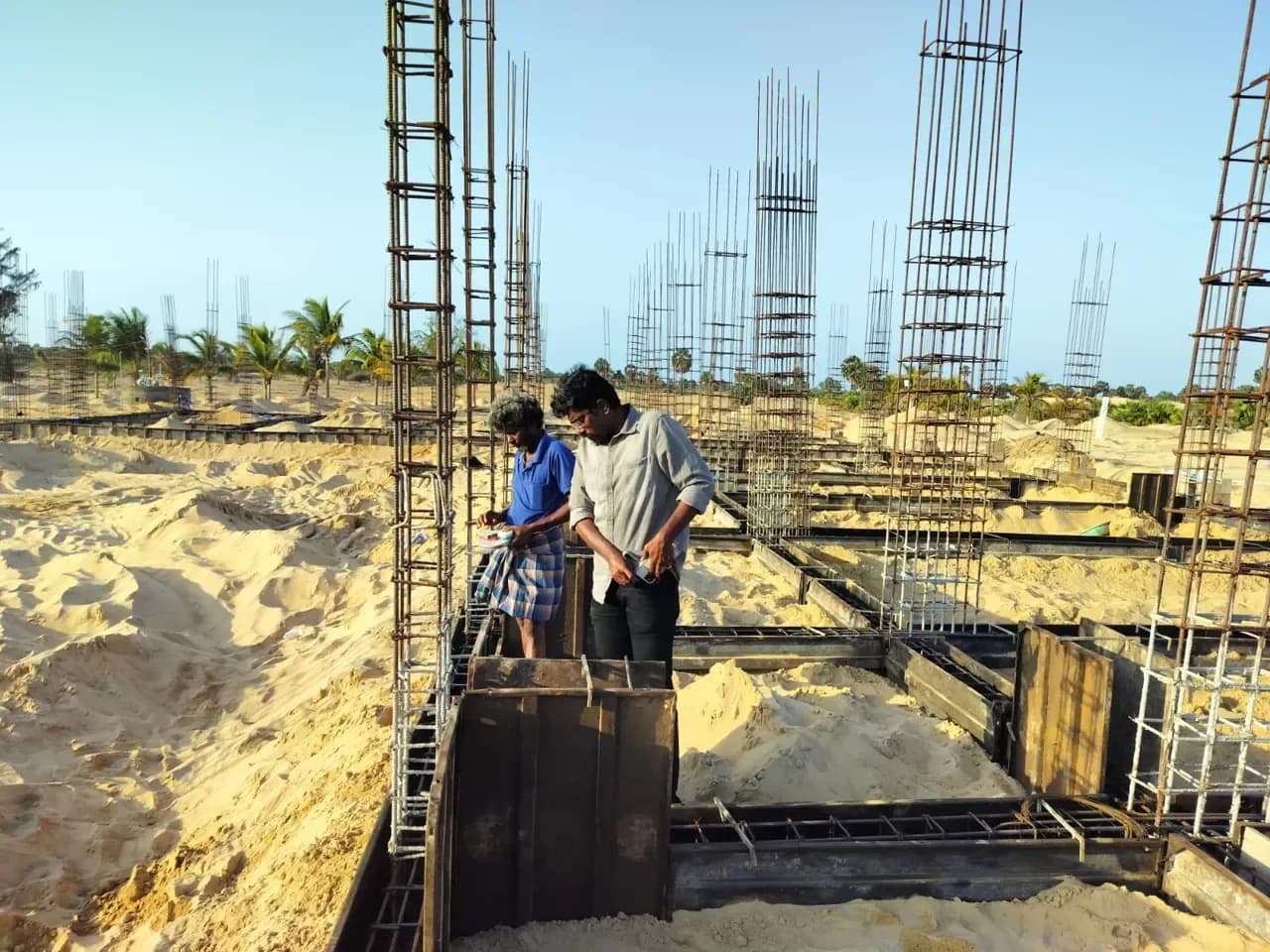
We certify a building only after our engineers have inspected it in person. These photos are from our own site work.
Worried about an existing building? Start with an inspection.
See our structural inspectionOur other services
Structural design & drawings
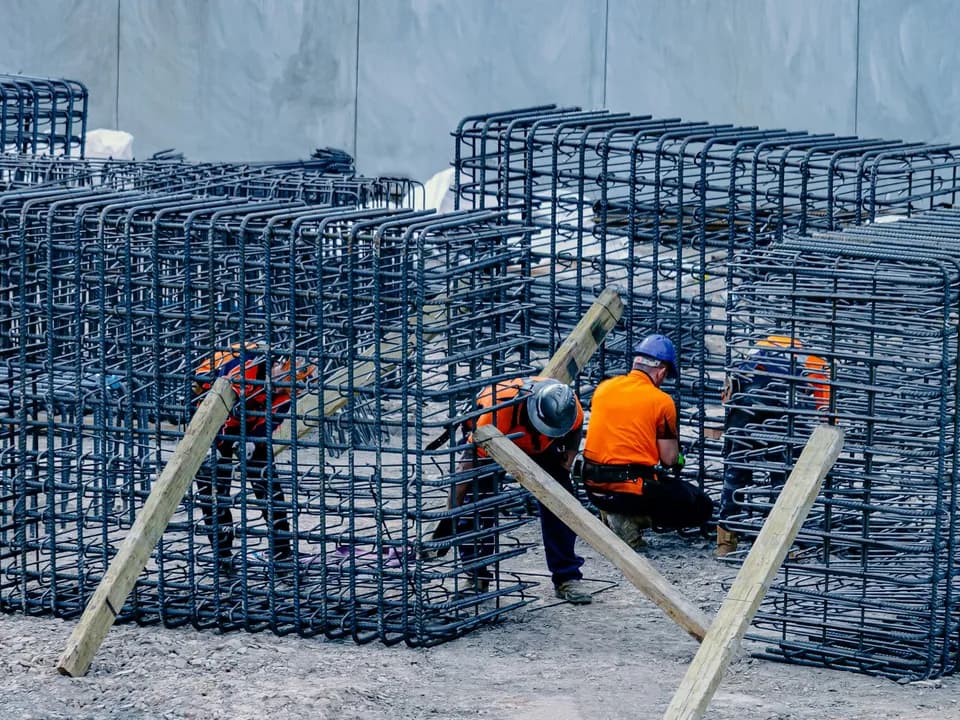
Safe, economical RCC and steel structures designed to IS codes: foundations, columns, beams, slabs and staircases, with drawings your contractor can build from.
- Structural analysis and design report
- Foundation, column and footing layout
- Beam, slab and staircase reinforcement details
Bill of quantities & estimation
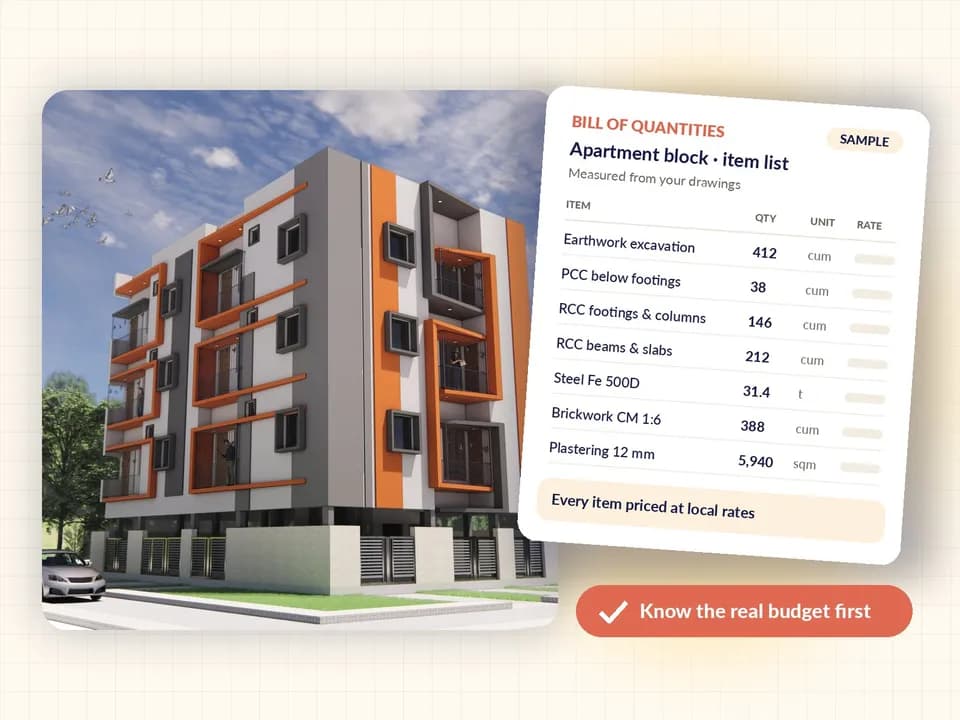
Itemised BOQ and cost estimates from your drawings, so you know the real budget before the first brick is laid.
- Item-wise bill of quantities
- Material and labour estimate
- Stage-wise payment schedule for contractors
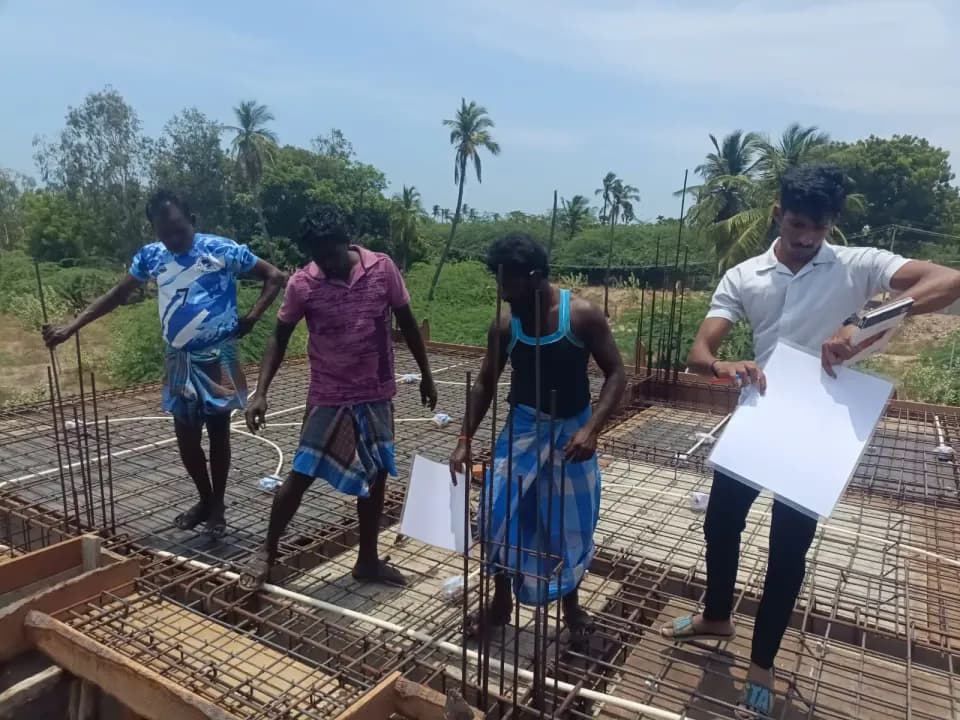
Site visits & rebar checking
An engineer on your site at the stages that matter, checking reinforcement before every concrete pour.
- Stage-wise site inspection
- Rebar, cover and shuttering checks before pours
- Photo report after every visit
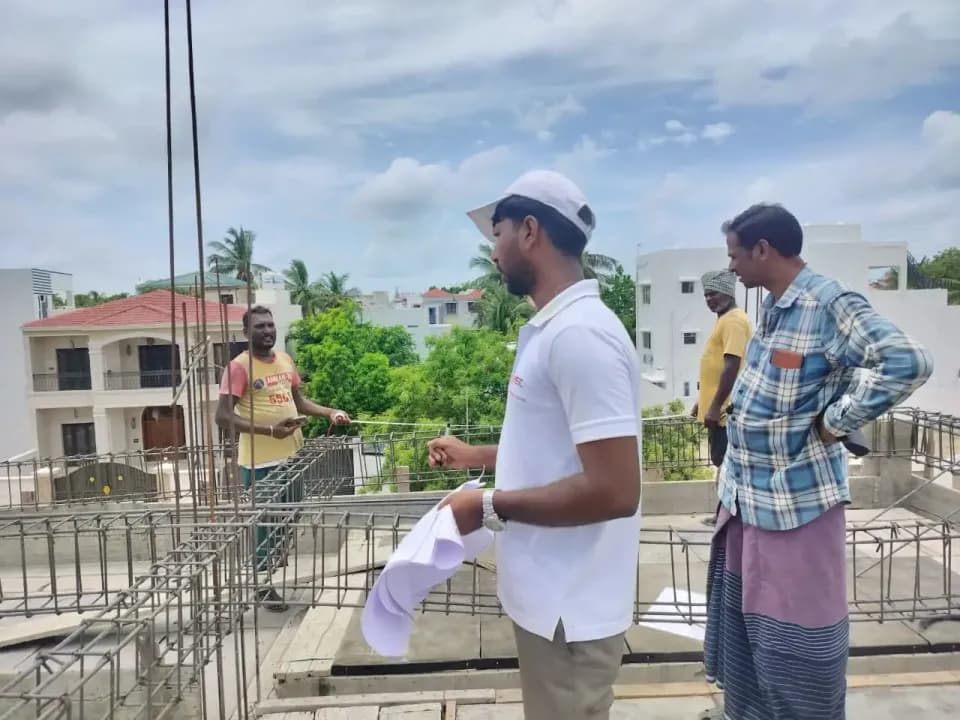
Onsite structural stability inspection
A structural engineer visits your building, checks cracks, columns, beams and slabs, and gives you a written report on its stability and the repairs it needs.
- Onsite visual inspection of foundations, columns, beams, slabs and walls
- Crack mapping with photos and measurements
- Non-destructive tests (rebound hammer, cover meter) where needed
Structural stability certificate in major cities
Structural stability certificate across Tamil Nadu
Guides on this topic
Read before you build
 Structure
22 Nov 2026 · 6 min read
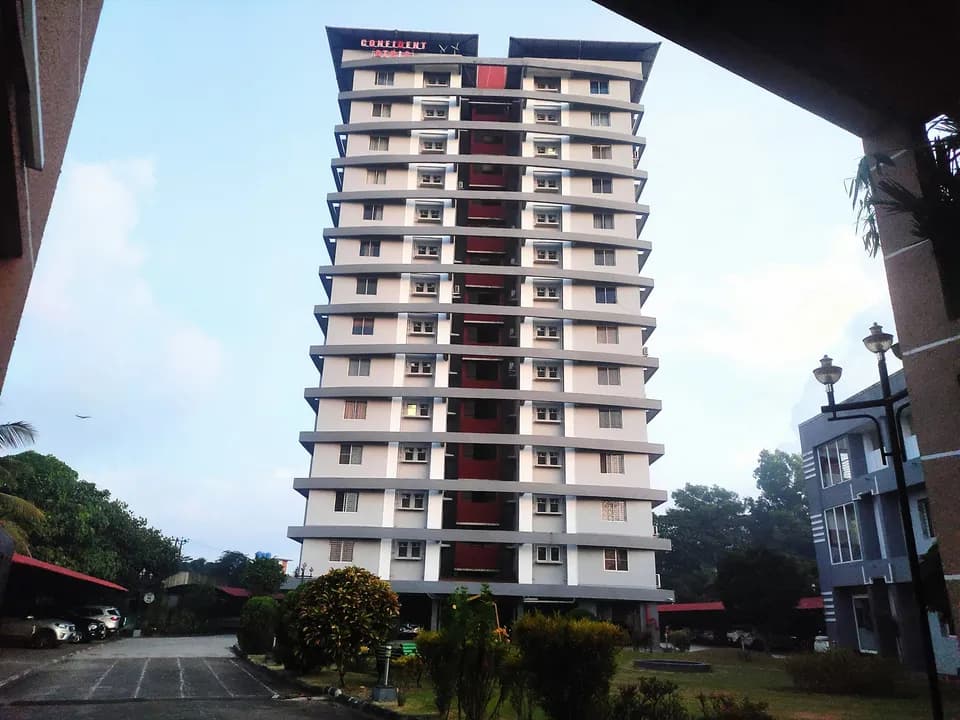
Structural audit for apartments in Tamil Nadu: when and how to do it
Cracked columns, rusting steel and falling plaster worry every apartment association. Here is what Tamil Nadu’s rules actually require, when an audit makes sense, what the engineer tests, and how to act on the report.
Read the article → Approvals
22 Nov 2026 · 8 min read
Structural stability certificate for schools, marriage halls and hospitals in Tamil Nadu
Schools, kalyana mandapams and hospitals hold large numbers of people, so licensing authorities often ask for a structural stability certificate. Here is what the engineer inspects, what to keep ready, and what happens if problems are found.
Read the article → Approvals
6 Oct 2026 · 6 min read
Structural stability certificate: when you need one and what the engineer checks
A structural stability certificate is an engineer’s signed statement that a building is designed or found fit to carry its loads. Here is when it is asked for, what gets checked, and why it should never be a formality.
Read the article →Start with a conversation
Ready to start your structural stability certificate?
Share your plot size and plans, we’ll tell you honestly what it takes.