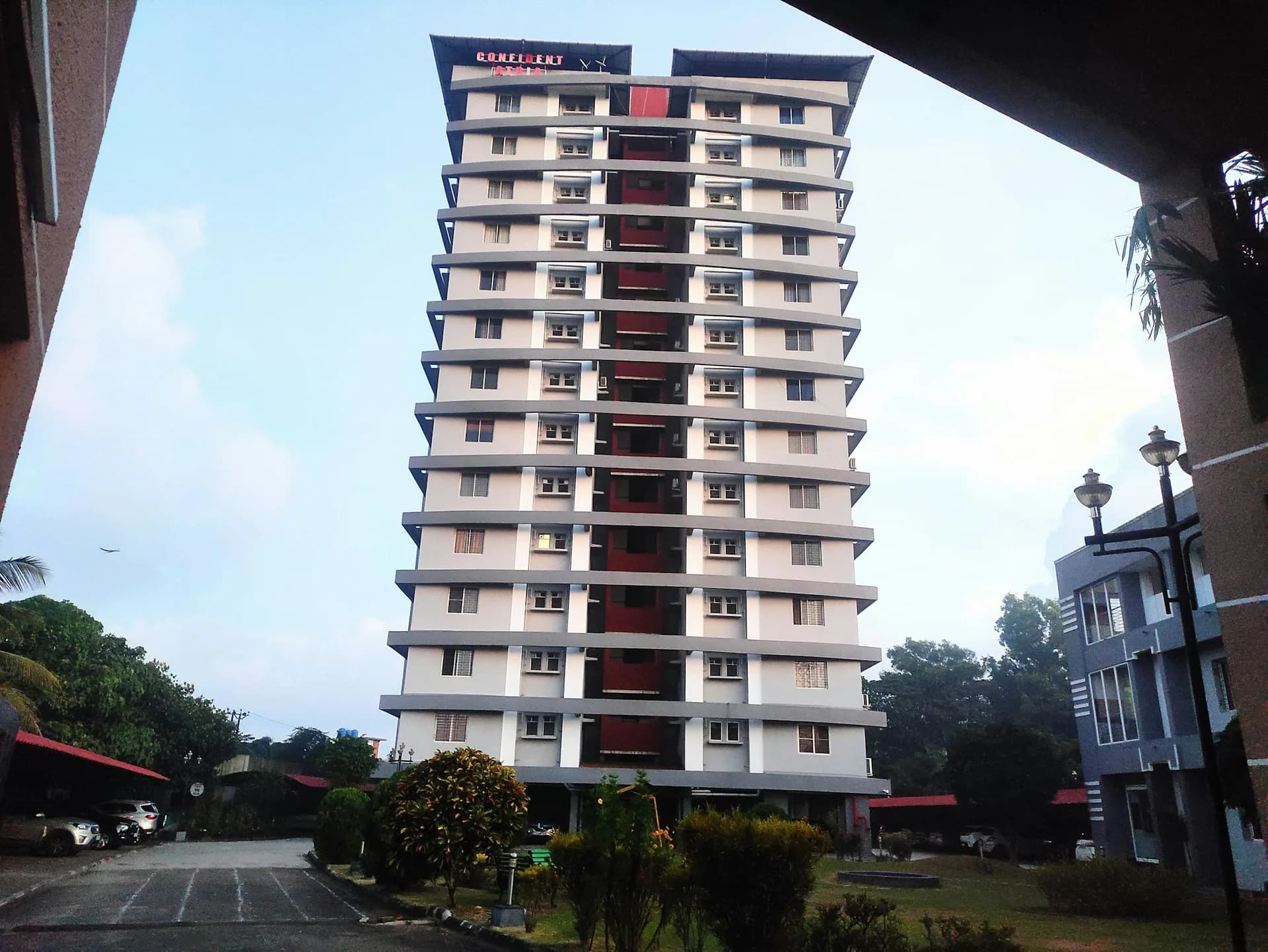
Many apartment blocks built in Tamil Nadu in the 1990s and 2000s are now showing their age: cracks in columns, rusting steel at balcony edges, plaster falling from sunshades, damp in basements. Associations then face a hard question. Is the building safe, and what needs to be done first? A structural audit answers it with evidence instead of guesswork.
This guide explains what the rules in Tamil Nadu actually require, when an audit makes sense, what the engineer checks and tests, and how to use the report. The legal points were checked in November 2026; where we could not confirm a rule, we say so.
What the rules in Tamil Nadu say
There is a lot of confusion here, so it is worth being precise.
- Rule 51(9) of the 2019 building rules covers maintenance of buildings in seismic Zone III, which includes Chennai. High-rise buildings and buildings for public assembly that are more than 50 years old must be inspected by a registered structural engineer, who files a structural inspection report, and any remedial work recommended must be completed within five years. A seismic vulnerability evaluation by a registered structural engineer is required before any strengthening or retrofitting.
- The Tamil Nadu Apartment Ownership Act, 2022 does not set a structural audit duty. It does require the association’s bye-laws to provide for maintaining the common areas and repairing the common facilities, lets the association insure the building against fire, flood and cyclone if a majority of owners want it, gives it access to flats for repairs, and allows redevelopment where the appropriate authority certifies that the building is in a ruinous condition.
- Local bodies can act against unsafe buildings. Before each monsoon, the Greater Chennai Corporation’s engineers inspect dilapidated buildings, can order repairs or serve demolition notices under the Chennai City Municipal Corporation Act, 1919, and refer doubtful cases to the PWD, Anna University or IIT Madras.
We found no general Tamil Nadu rule requiring periodic audits of ordinary apartment blocks at a fixed age, and no confirmed “30-year rule” for the state. Other states do have one: in Mumbai, for example, the municipal law requires a structural stability certificate once a building turns 30 and every 10 years after that. That is a different state’s law, but it shows why many engineers suggest a periodic check for older buildings here too.
When your association should order an audit
- Visible distress: cracks in columns or beams, wide or growing cracks in walls, rust stains or exposed steel, spalling concrete, sagging or leaking slabs.
- Age and exposure: buildings over 25 to 30 years old, and buildings near the sea where salt air corrodes steel faster.
- Before big decisions: adding floors or water tanks, major repairs or re-plastering, a change of use, or discussions about redevelopment.
- After events: a flood that left the ground floor in water, a nearby excavation, a fire, or a notice from the local body.
An early audit is cheaper than a late one. Corrosion caught while it is shallow can be repaired locally; left alone, it spreads along the bars and the repair becomes major.
What the engineer checks
A structural audit has three parts: a visual survey, tests where needed, and analysis.
- Visual survey: the engineer walks the whole building, including the basement, stilt parking, terrace, ducts and a sample of flats, mapping cracks, rust, spalling, damp and any changes owners have made, such as removed walls or new openings.
- Non-destructive tests: to judge the concrete and steel without breaking the building, using the methods in the IS 516 series: the rebound hammer for surface hardness (IS 516 Part 5 Section 4), ultrasonic pulse velocity for internal quality (Section 1), half-cell potential for the risk of steel corrosion (Section 2) and carbonation depth (Section 3). A cover meter shows how much concrete protects the bars.
- Cores where needed: small concrete cores cut from members and crushed in a laboratory (IS 516 Part 4) give the actual strength when tests disagree or the stakes are high.
- Analysis: for buildings in higher seismic zones, or where floors are to be added, the engineer may evaluate the structure’s earthquake resistance using IS 15988, the standard for seismic evaluation of existing reinforced concrete buildings.
Common problems in Tamil Nadu apartments
- Corrosion of reinforcement, especially in coastal Chennai and the southern coast, where salt and moisture reach the steel. It shows as rust stains, cracks along the line of the bars and concrete falling off.
- Carbonation of older concrete, which removes the natural protection around the steel even far from the sea.
- Water damage from leaking terraces, bathrooms and overhead tanks, which weakens slabs and beams over the years.
- Unauthorised alterations: walls removed, openings cut in beams, extra rooms or tanks on the terrace.
- Weak stilt floors, where open parking leaves the columns doing all the work in an earthquake.
What the report should give you
A useful report does not just list damage. It should state plainly whether the building is safe to occupy, explain the cause of each problem, and list repairs in order of priority: what must be done now, what within a year, and what can wait. Where strengthening is needed, it should describe the method, such as jacketing columns or treating corroded steel, so contractors can quote on the same scope.
Use the report to plan the work and the budget, and get repairs supervised by an engineer. Re-plastering over corroded steel without treating it only hides the problem for a few years.
Choosing the engineer
Choose an independent structural engineer, not the contractor who will do the repairs, so the scope is set by need rather than by what someone wants to sell. Ask what tests they will run and why, whether they will visit during repairs, and for a sample report. The engineer should be willing to explain the findings to the whole association in plain language.
How to get started
- Collect what you have: approved plans, structural drawings, the year of construction and records of past repairs.
- Agree the scope with the engineer: which areas, how many flats, and which tests.
- Give access to common areas and a sample of flats on the survey days.
- Discuss the report at a general body meeting and fund the priority repairs first.
Our onsite structural inspection covers exactly this, and where an authority asks for it, we can issue a structural stability certificate once the building qualifies. For a quick first look at a single crack, try our free AI crack check, or read cracks in house walls: when to worry.
Sources
Tamil Nadu Combined Development and Building Rules, 2019, Rule 51(9); Tamil Nadu Apartment Ownership Act, 2022; Greater Chennai Corporation guidelines on dilapidated buildings, reported by DT Next; Bureau of Indian Standards IS 516 (Parts 4 and 5) and IS 15988:2013.
Worried about your building? Talk to our engineers about an audit.
Questions people ask
Is a structural audit compulsory for apartments in Tamil Nadu?
We found no general Tamil Nadu rule, as of November 2026, that requires periodic structural audits of ordinary apartment buildings. The building rules do require high-rise and public-assembly buildings in seismic Zone III that are over 50 years old to be inspected by a registered structural engineer. For other buildings, an audit is a sensible choice rather than a legal duty, though local bodies can act against buildings they find unsafe.
Who pays for an apartment structural audit?
Usually the owners’ association, from its maintenance or sinking fund, because the structure is common property. Under the Tamil Nadu Apartment Ownership Act, 2022, the association’s bye-laws must provide for maintaining the common areas and repairing the common facilities.
How long does a structural audit take?
It depends on the size of the building, how many flats the engineer must enter, and whether tests or cores are needed. A small block can be surveyed in a day or two; the report follows once test results are in. Ask for a timeline when you agree the scope.

Written by
Er. Venkadeshwaran Marimuthu
Founder & Managing Director
Founded Almino in Ramanathapuram in 2016. Leads one team of structural engineers, draughtsmen and estimators, so every home is designed to IS codes and priced with an itemised BOQ before work begins.
Related services:Onsite structural stability inspectionStructural stability certificate
Keep reading
All articles Structure
22 Nov 2026 · 6 min read
Old building inspection: before you buy, add a floor or repair
An old building can be a good buy or an expensive mistake. Here is when to get a structural inspection, what the engineer looks for, which tests matter, and how to decide between repair, strengthening and rebuilding.
Read the article → Structure
19 Nov 2026 · 7 min read
Cracks in your house walls: which are harmless and which need an engineer
Almost every house gets cracks. Most are harmless plaster or shrinkage cracks, but a few are early warnings. Here is how to tell them apart, how to monitor a crack at home, and when to call a structural engineer.
Read the article → Structure
18 Oct 2026 · 6 min read
G+1 now, G+2 later: designing the structure for future floors
Many families build G+1 now and plan another floor when the children grow up or a loan is cleared. Whether that floor can be added safely is decided today, by the foundation and columns you design now.
Read the article →