
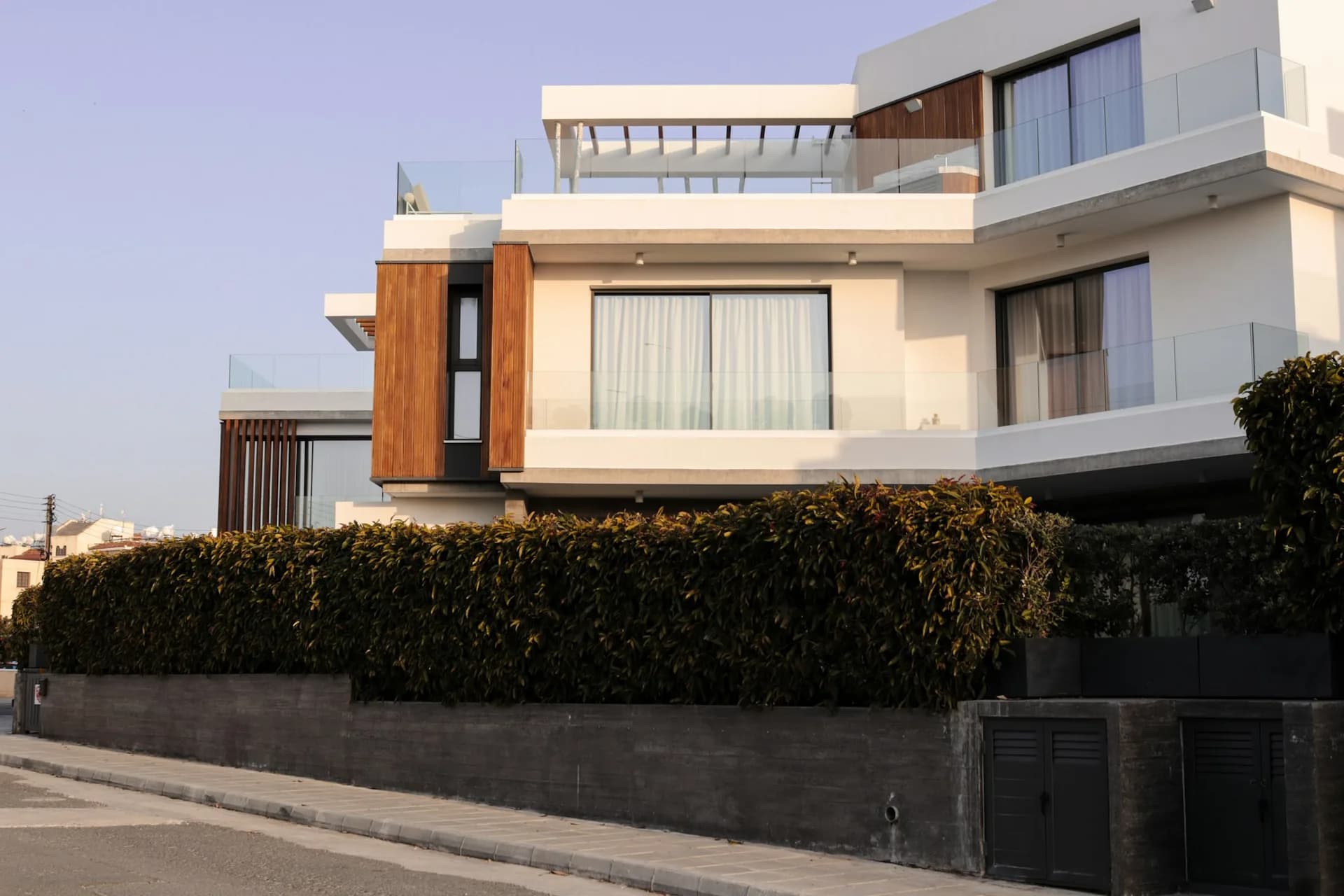
Families planning a house in Tirunelveli often start with a per-sq-ft rate heard from a contractor or a relative. It is a useful first idea. It is not a budget. Two houses of the same size, on two plots a few kilometres apart, can cost quite differently.
Tirunelveli and its neighbours, Thoothukudi towards the coast and Tenkasi towards the Western Ghats, have their own conditions. Soil changes from place to place. The coast brings salt. Water can be plentiful in one village and scarce in the next. This guide explains what really moves your cost, and how to reach a figure you can plan around.
We do not give rates here. Material prices change, and a rate without your drawings tells you very little. Instead, we explain the factors behind the number.
Key takeaways
- Treat any per-sq-ft rate as a rough starting point, never as a final cost.
- Soil in the area varies widely. A soil test before design is money well spent.
- Coastal plots near Thoothukudi need concrete that resists salt.
- Water, transport and plot conditions can all add cost that a basic rate ignores.
- A BOQ estimate from your own drawings shows the real cost and makes contractor quotes comparable.
Why one rate cannot describe your house
A per-sq-ft rate assumes an average plot, average soil and an average specification. Your house will have its own design, its own foundation and its own choice of materials. The rate also hides three questions that matter a great deal:
- Which area? Built-up, plinth or carpet area. Are sit-outs, balconies and the staircase counted, and at what share?
- Which specification? Concrete grade, cement and steel brands, tile allowance, door and window type, number of electrical points.
- What is excluded? Compound wall, sump, septic tank, borewell, EB connection, kitchen work and approvals are often outside the rate.
Until these are written down, two quotes with the same rate are not the same offer.
Local factors that move cost around Tirunelveli
A patchwork of soils
The district has a mix of ground conditions. Red soil is common in many areas. Black cotton soil occurs in parts of the district, and hard strata are found close to the surface in places. The difference matters for the foundation.
Black cotton soil swells in the rains and shrinks in the dry months. It can lift and crack a house if the foundation is not detailed for it. Remedies may include deeper footings, plinth beams, under-reamed piles, soil replacement and good drainage around the building. Each adds cost, but far less than repairing a cracked house. Where hard strata are near the surface, footings may be shallower, though excavation can be slower.
Neighbouring plots do not always have the same soil. A soil test is the only reliable way to know what is under yours.
Near the Thamirabarani
Plots close to the Thamirabarani river or its channels can have a higher water table and softer, wetter soil. Excavation may need dewatering during or after the rains. The plinth may need to be raised above the surrounding ground to keep water out. Low-lying plots may also need filling. These are site costs that a basic rate rarely includes.
The coast: Thoothukudi and nearby towns
Towards Thoothukudi and the coastal belt, soils can be sandy and groundwater can be saline. Salt in the air and the ground attacks reinforcement steel. When steel rusts, it swells and cracks the concrete around it.
Good practice on coastal sites is a suitable concrete grade, adequate cover to the steel, careful curing and sometimes protective coatings. Construction water may need to be bought in if the bore water is salty. This adds some cost at the start. It also adds years to the life of the house. Our article on foundations for coastal and black-cotton soil explains the approach in more detail.
The Tenkasi side
Towards Tenkasi and the foothills, plots may be sloping or have rock near the surface. Sloping sites can need retaining walls, stepped foundations and more earthwork. Rock can reduce foundation depth but slows excavation. Heavier rain on this side also makes good roof drainage and waterproofing more important.
Water and transport
Construction uses a lot of water for mixing and curing. Where the bore yield is poor or the water is unsuitable, water must be brought in by tanker. That cost runs through the whole project. For plots in smaller villages, transport of cement, steel, sand and aggregate also adds up, especially for small loads.
Approvals
Approval comes from the corporation, municipality, town panchayat, village panchayat or planning authority that covers your plot, under the Tamil Nadu Combined Development and Building Rules 2019. Fees, documents and timelines depend on the location, plot size and type of building. Check with your local body early and include approval costs in your budget.
What a basic rate often leaves out
- Compound wall and gate
- Sump, overhead tank and motor
- Septic tank and soak pit
- Borewell
- EB service connection
- Extra foundation work for weak, wet or expansive soil
- Filling and levelling of low plots, or retaining walls on slopes
- Kitchen, wardrobes and false ceiling
- Design, approval drawings and fees
Ask every contractor for a written list of inclusions and exclusions. It is the quickest way to see what a rate really means.
The structure decides a large part of the cost
In an RCC house, concrete and steel are the biggest single items. A structure designed by habit may use too much steel in some places and too little in others. A structural design to IS 456, with loads to IS 875 and earthquake provisions to IS 1893, puts the material where it is needed. It also tells the BOQ exactly how much concrete and steel to count.
How a BOQ shows the real cost
A bill of quantities measures every item of work from your drawings and prices each one. You see the concrete in cubic metres, the steel in kilograms, the brickwork, plaster and tiles in area, and every door, window and fitting by count.
- A budget you can rely on, before you take a loan or start digging.
- Fair comparison, because every contractor prices the same list.
- Clear changes, because any upgrade shows its exact effect.
Read what a BOQ is and how it helps you compare quotes for a fuller explanation.
The soil under your plot, the air around it and the drawings on your table decide your cost. The rate you heard decides very little.
Comparing quotes fairly
- Give every contractor the same drawings and the same BOQ.
- Check the area each one measured and how.
- Compare exclusions side by side, not just totals.
- Compare allowances for tiles, doors, windows and fittings.
- Confirm brands and grades of cement, steel and concrete.
- For coastal plots, ask how they will protect the steel and cure the concrete.
- Link payments to completed stages of work.
A sensible order of steps
- Fix your needs and a rough budget.
- Get an architectural plan for your plot.
- Do a soil test, then get the structural design.
- Have a BOQ prepared from the final drawings.
- Ask two or three contractors to price the BOQ.
- Keep a contingency for the unexpected.
Talk to Almino about your house
Since 2016, Almino Structural Consultancy has worked on more than 3,000 buildings across Tamil Nadu, from our head office in Ramanathapuram. We know the coastal and black cotton conditions of the southern districts well.
The first consultation is free, by phone or WhatsApp. Contact us with your plot location and any plan you have, and we will tell you plainly what you need.
Questions people ask
Is building near Thoothukudi more expensive than inland Tirunelveli?
Not always, but coastal sites have extra needs. Salt in the air and groundwater attacks reinforcement, so good practice is a suitable concrete grade, adequate cover, careful curing and sometimes protective coatings. Construction water may need to be brought in. These add some cost at the start and reduce repair costs later. Your soil and design matter just as much.
Do I need a soil test for a house in Tirunelveli district?
It is strongly recommended. Soil in the area varies from red soil to black cotton pockets and hard strata, sometimes within a short distance. Black cotton soil needs special foundation detailing, while hard strata may allow shallower footings. A soil test tells the structural engineer which applies, and helps avoid both waste and cracks.
What should a construction quote in Tirunelveli list?
It should state the area measured and how it was counted, the scope of work, the brands and grades of cement, steel and concrete, allowances for tiles, doors and fittings, and a clear list of exclusions. Ideally, every contractor should price the same BOQ prepared from your drawings, so the quotes can be compared line by line.

Written by
Er. Venkadeshwaran Marimuthu
Founder & Managing Director
Founded Almino in Ramanathapuram in 2016. Leads one team of structural engineers, draughtsmen and estimators, so every home is designed to IS codes and priced with an itemised BOQ before work begins.
Related services:Bill of quantities & estimationStructural design & drawings
Keep reading
All articles Cost & budget
21 Nov 2026 · 7 min read
House construction cost in Madurai: what decides your budget
A per-sq-ft quote is where most Madurai house budgets start, but it rarely tells the full story. Here is what the quote covers, what it leaves out, which local factors move the cost, and how to compare contractors fairly.
Read the article → Cost & budget
30 Oct 2026 · 6 min read
House construction cost in Ramanathapuram (2026): what a per-sq-ft rate really includes
Contractors around Ramanathapuram quote a per-sq-ft rate, but two quotes with the same rate can hide very different houses. Here is what the rate usually covers, what it leaves out, and how to find your real number.
Read the article →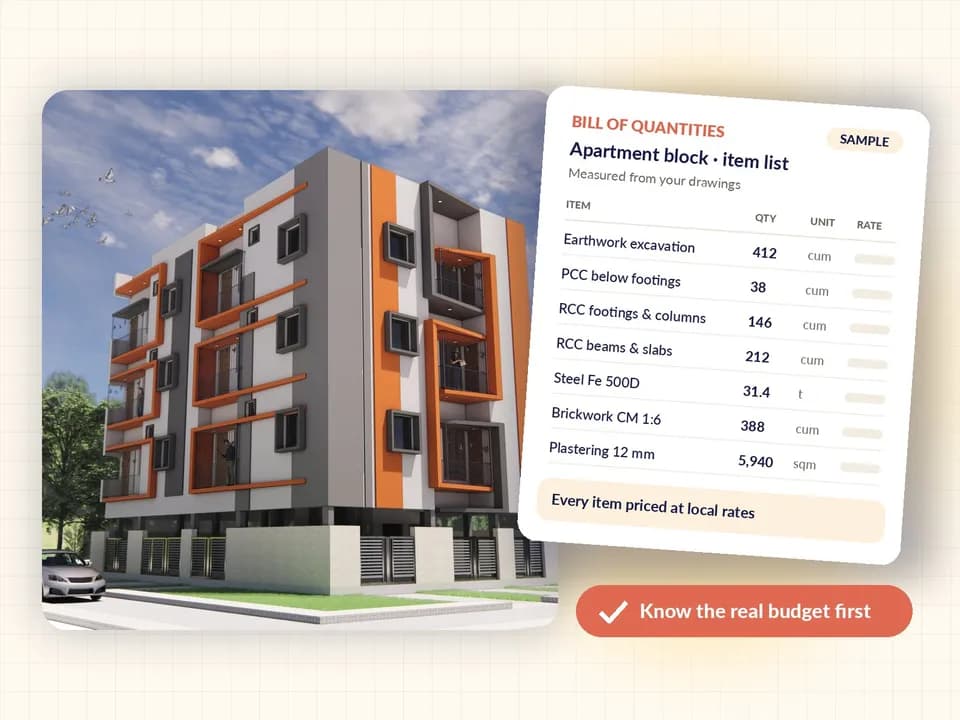 Cost & budget
24 Oct 2026 · 6 min read
What is a BOQ, and how it helps you compare contractor quotes
A bill of quantities lists and measures every item in your house before work starts. It turns vague per-sq-ft quotes into figures you can compare line by line, and helps you avoid costly surprises mid-construction.
Read the article →